

I’ve always been really interested in mental, physical, emotional, and behavioral conditions, as well as the human brain in general. I believe there’s a lot to learn about each other, and that understanding each other better will help us be nicer and better people. That’s why I’m starting this little series 🙂
I want these posts to be some compilations of interesting research and information about new and “not-talked about” disorders/topics. If there are any ideas or relevant concepts that interest you and you’d like to know more about/ tell others more about, PLEASE feel free to comment them down here and i’ll add it to the next post of the mini series!

Alice in Wonderland Syndrome (AIWS)
First things first, what on earth (or in wonderland) is this strange sounding disorder?
This rare condition causes a person to feel bigger or smaller than they really are (simply put). It distorts a person’s perception and orientation for a temporary amount of time (varying from case to case).
They may also find that their surroundings are distorted or further away than reality.
Also known as Todd’s syndrome or dysmetropsia, those with Alice in Wonderland syndrome often also experience a feeling of disconnection from one’s own body, feelings, thoughts, and environment.
“Epilepsy and stroke were sometimes linked as well, the researchers said. Some even believe that Lewis Carroll, who described his migraines in his journal, may have suffered from it.
Alice in Wonderland Syndrome is not an optical problem or a hallucination. Instead, it is most likely caused by a change in a portion of the brain, likely the parietal lobe, that processes perceptions of the environment. Some specialists consider it a type of aura, a sensory warning preceding a migraine. And the doctors confirmed that it usually goes away by adulthood.”
HELENE STAPINSKI / New York Times Article
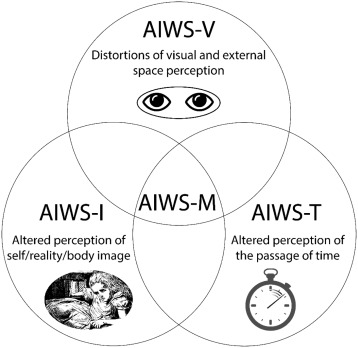
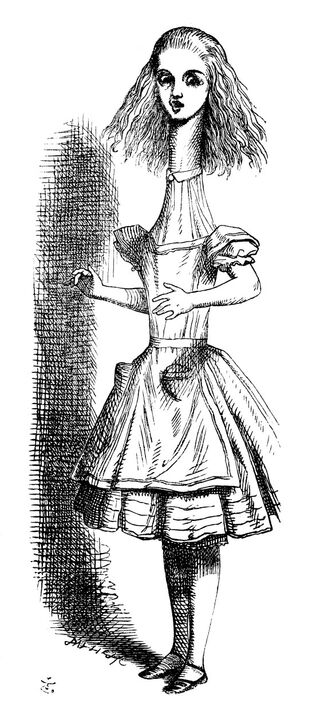
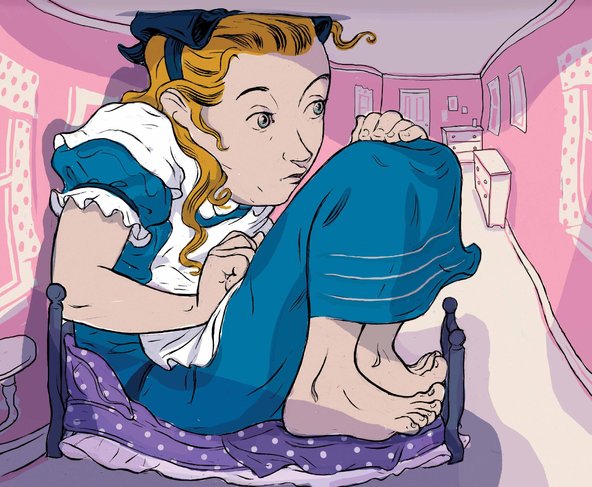
I find this incredibly fascinating as we all have moments where we feel out of our bodies and disconnected with ourselves. This takes it to a new level of confusion, though. It also reminded me strongly of Body Dysmorphia – a phenomenon that so many of us deal with every day.
It enforces again, how strong the human brain really is 🙂
REFERENCES
Frontiers In Neurology—> https://www.frontiersin.org/articles/10.3389/fneur.2019.00473/full
Article–>
https://archive.nytimes.com/well.blogs.nytimes.com/2014/06/23/alice-in-wonderland-syndrome/
 Wabi Sabi
Leave a comment